2017 —
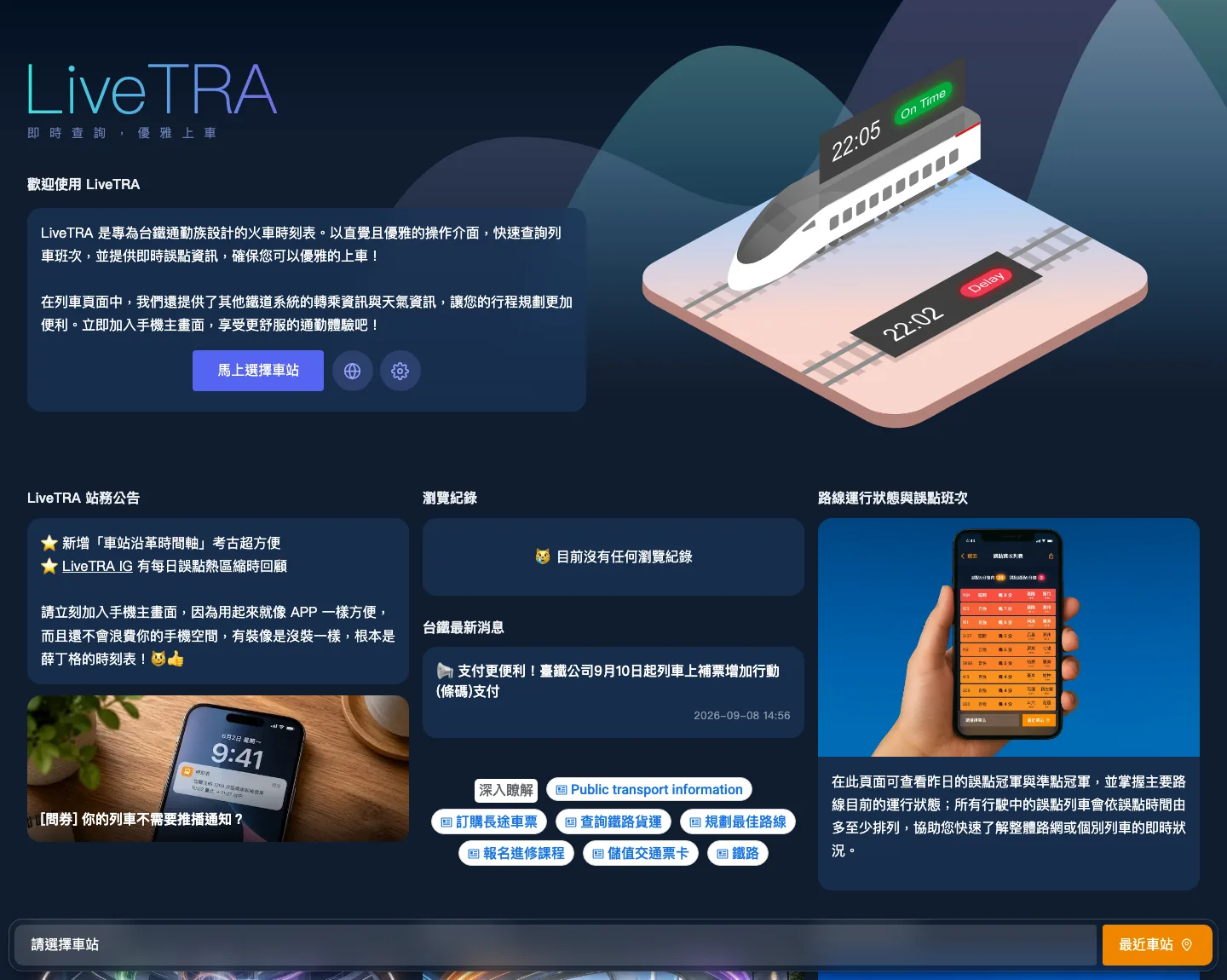
LiveTRA
A better way to know when your train is coming.
Real-time train information for Taiwan Railways — schedules, delays, transfers and live status in one screen.
490,000users1.04Msearch clicks6.1avg. position32%direct visits
Taiwan · Taipei
I'm Boggy. I design and build things for the web, then keep them running. The things here are live, and people actually use them.
Product design · UX · Frontend · Backend · Data · Infrastructure

Every number comes straight from Google Analytics or Search Console. None of it is estimated, and none of it is dressed up.
people used LiveTRA this year
Google Analytics · Jan 1 – Sep 8, 2026
clicks from Google Search in 12 months
Search Console · Sep 2025 – Sep 2026
that LiveTRA has been running
First commit June 2017
on Google for 空拍機地圖
Search Console · 12 months
A more detailed breakdown lives inside each case study.
All three are products I built and still maintain. Every one of them started as a problem I ran into in my own life and wanted to solve.
2017 —
A better way to know when your train is coming.
Real-time train information for Taiwan Railways — schedules, delays, transfers and live status in one screen.
2025 —
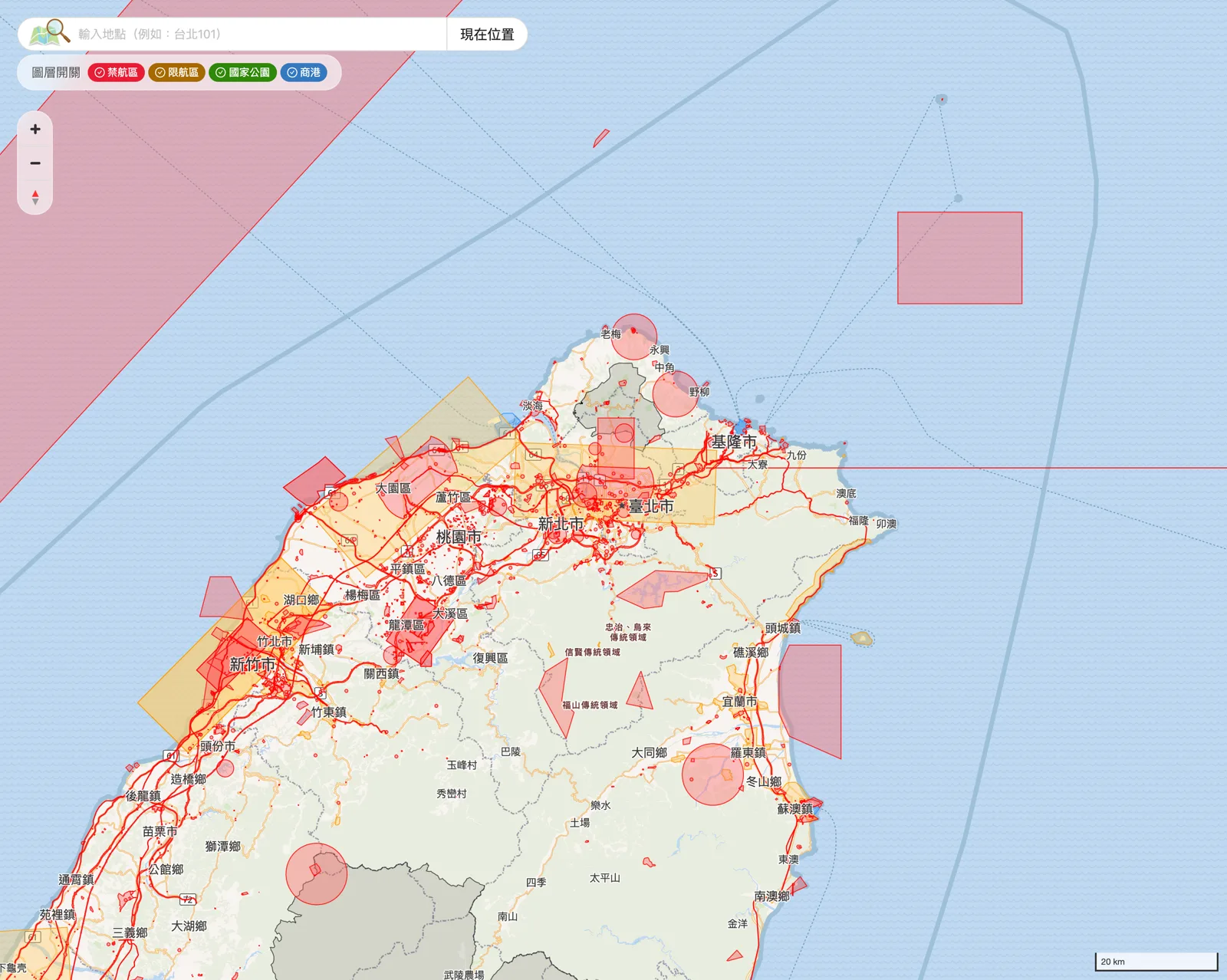
Where can I fly?
An interactive map of Taiwan's drone flight restrictions — built because every existing one was hard to look at.
2017 · 2026
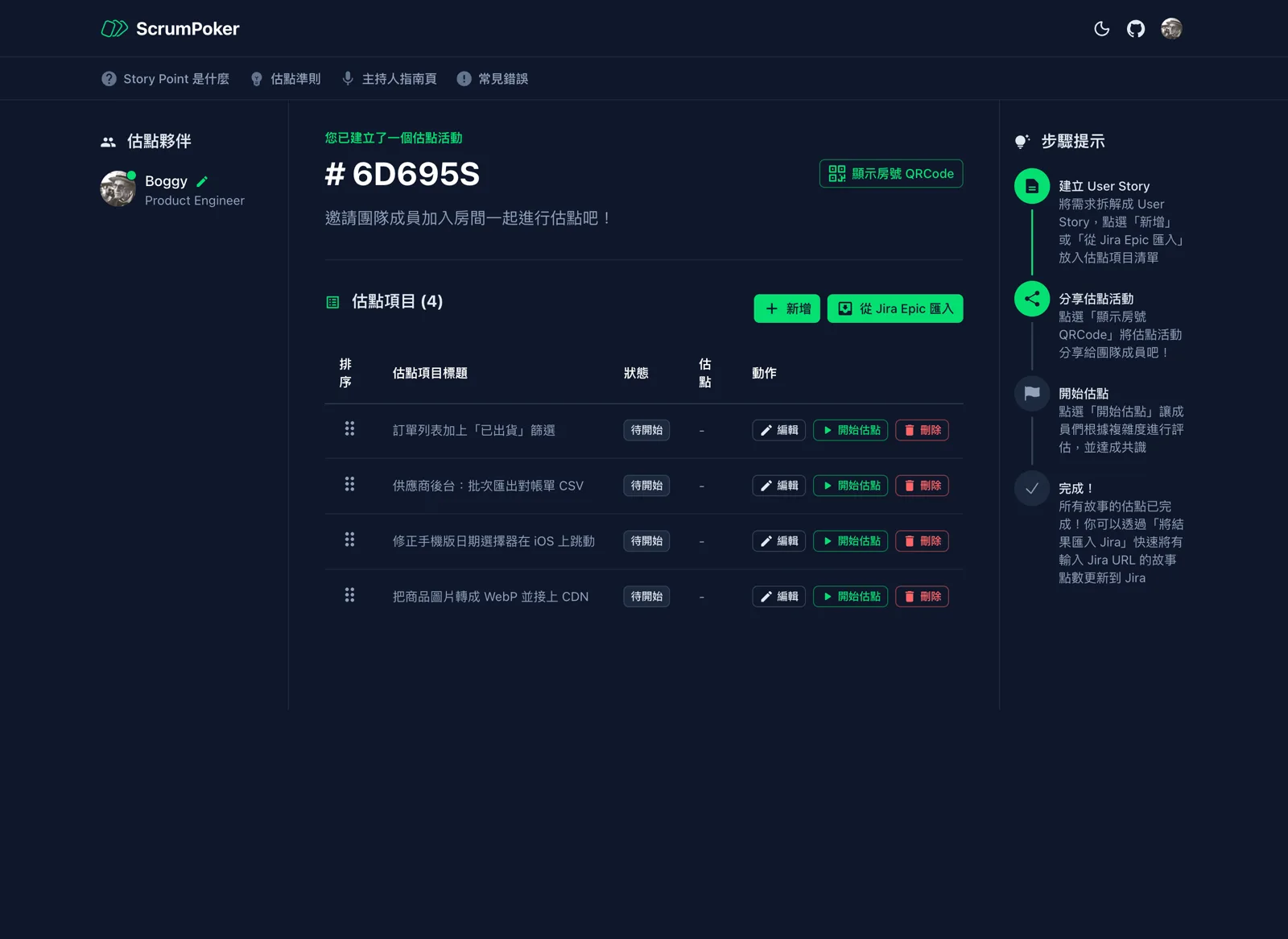
Estimation was taking whole afternoons.
Planning poker you vote on from your phone, with the points syncing straight back into JIRA. Made for my own team at work.
I don't really separate design and development. To me they're the same job at different stages, seen from different angles — and you trade between those angles depending on what you're trying to achieve.
Most of my projects start as a small annoyance. Too many taps. Something that makes no sense. Something I wish existed. I start there, not with a framework.
Before architecture, before tooling: what does this actually have to do? The goal is never to build more. It is to not miss the point.
Interaction, information architecture, hierarchy, and the small details that make something feel obvious. Feeling simple is not the same as being simple.
Usually Vue, Nuxt and Node.js. When a project needs something else, I use something else — PostgreSQL, PHP, PostGIS, Python, whatever infrastructure it takes to make it work.
A product on localhost is not a product. I like putting things in front of real people and finding out what I got wrong.
This is the part most portfolios skip. LiveTRA has been running for nine years. DroneMapTW checks itself against the government every day. You only find out whether something can survive after it ships.
Shipping is not the end. It is when the interesting part starts.
AI changed how I build. I use it as a collaborator — to explore ideas, generate code, get up to speed on unfamiliar technology, refactor systems, and get from sketch to working software faster. It has not touched the parts I care about. I still decide what to build, why it should exist, how it should behave, and whether the result is any good. AI can make me faster. It cannot decide what to make.
Three ideas on my desk right now. Two of them you can already play with.
It does the job. Running it costs more than I can justify putting online yet, so it sits on my machine while I work that out.
My air conditioner and my fan did not speak HomeKit, so I built the bridge myself. Now they do.
Something like BoldVoice, but for Japanese, and cheap enough to actually run. This one is still a sketch.
I've been making things around music and language for years — a pitch-training game, Japanese listening tools, seven years of electronic keyboard, a year spent taking my Japanese from N3 to N1, and a job at a music label. Japanese pronunciation is where those two threads finally meet. I think I've been circling this idea for twenty years without noticing.
Have an idea, a problem, or something you wish existed? I'd like to hear about it.